Introduction
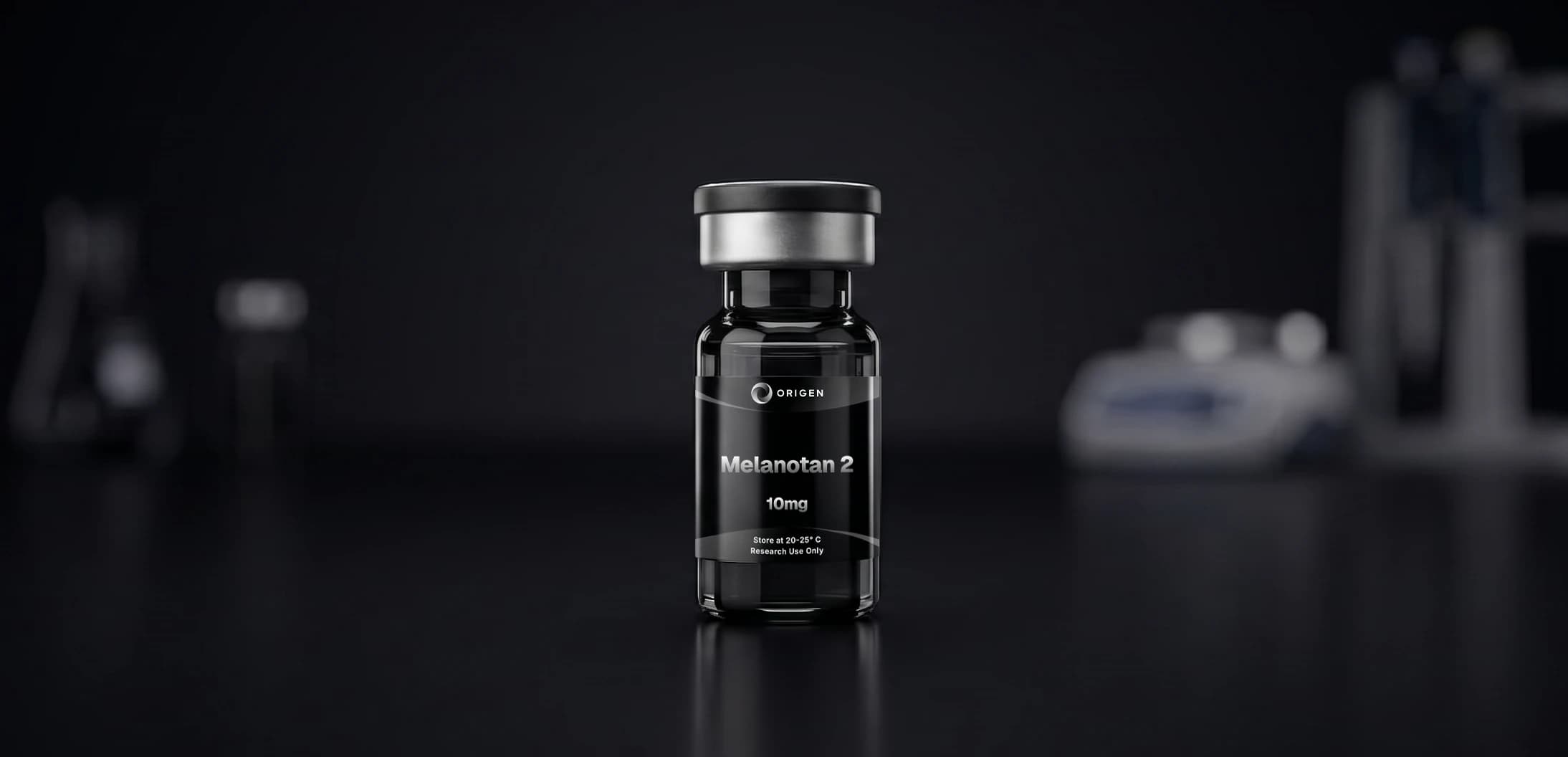
Melanotan II is a synthetic peptide analog developed to study melanocortin receptor activity, particularly in relation to pigmentation and neuroendocrine signaling. As part of the broader category of melanocortin peptides, it provides insight into how peptide-receptor interactions influence complex biological systems.
In peptide research, Melanotan II is frequently used as a model compound for understanding receptor selectivity, signal transduction, and the role of melanocortin pathways in cellular and systemic processes. Its well-characterized mechanism makes it a valuable tool in laboratory research compounds.
Key Takeaways
- Melanotan II is a synthetic analog of melanocyte-stimulating hormone (MSH).
- It interacts with melanocortin receptors (MC1R–MC5R).
- The peptide is widely studied for receptor signaling and pigmentation pathways.
- It influences multiple biological systems through GPCR activation.
- Melanotan II serves as a model for multi-receptor peptide interactions.
What Is Melanotan II?
Melanotan II is a cyclic heptapeptide derived from alpha-melanocyte-stimulating hormone (α-MSH), a naturally occurring peptide involved in pigmentation and energy regulation. It was developed to improve the stability and receptor affinity of native melanocortin peptides.
As a melanocortin receptor agonist, Melanotan II binds to a family of G protein–coupled receptors known as melanocortin receptors (MC receptors). These receptors are involved in a variety of biological functions, including pigmentation, energy balance, and neuroendocrine signaling.
Melanotan II is structurally modified to resist enzymatic degradation, allowing it to remain active longer in experimental systems. This enhanced stability makes it particularly useful in peptide research focused on receptor activity and signaling duration.
Molecular Structure and Mechanism
Melanotan II’s activity is driven by its interaction with melanocortin receptors and subsequent activation of intracellular signaling pathways.
Melanocortin Receptor Binding
Melanotan II interacts with several melanocortin receptor subtypes:
- MC1R: associated with pigmentation
- MC3R and MC4R: involved in energy balance and central signaling
- MC5R: linked to exocrine gland function
These receptors are part of the GPCR family and play roles in diverse physiological systems.
Signal Transduction Pathways
Upon binding to melanocortin receptors:
- adenylate cyclase is activated
- cyclic AMP (cAMP) levels increase
- protein kinase A (PKA) is activated
- downstream gene expression is modulated
This signaling cascade is central to melanocortin pathway research.
Cyclic Structure and Stability
Melanotan II’s cyclic structure contributes to:
- increased resistance to enzymatic breakdown
- improved receptor binding affinity
- extended activity in laboratory research compounds
This structural feature is a key focus in peptide design studies.
Multi-Receptor Activity
Unlike highly selective peptides, Melanotan II interacts with multiple receptor subtypes. This makes it useful for studying:
- receptor cross-talk
- pathway integration
- systemic signaling networks
Common Areas of Research
Melanotan II peptide research spans several areas of scientific investigation.
1. Pigmentation Studies
- melanin production pathways
- melanocyte activity
- receptor-mediated pigmentation models
2. Receptor Signaling Research
- melanocortin receptor activation
- GPCR signaling pathways
- ligand-receptor interaction analysis
3. Neuroendocrine Research
- central signaling mechanisms
- hormone regulation pathways
- peptide signaling in the brain
4. Energy Balance Studies
- metabolic signaling pathways
- appetite-related receptor activity
- systemic energy regulation models
5. Comparative Peptide Research
- Melanotan II vs α-MSH
- melanocortin receptor agonists vs antagonists
- selective vs non-selective peptides
Key Findings From Research Literature
Research literature highlights Melanotan II as a versatile compound for studying melanocortin receptor systems. Studies demonstrate that it effectively activates multiple receptor subtypes, allowing researchers to observe broad signaling effects.
One key finding is its enhanced stability compared to native α-MSH. This allows for prolonged receptor activation and more consistent experimental results.
Another important observation is its role in receptor cross-talk. Because Melanotan II interacts with multiple melanocortin receptors, it provides insight into how different signaling pathways interact within a single system.
Comparative studies also show that Melanotan II has higher potency and longer duration than endogenous peptides, making it a useful tool for extended observation of signaling processes.
Laboratory Handling and Research Considerations
Storage Conditions
Melanotan II is typically supplied as a lyophilized powder. Recommended storage practices include:
- storing in a cool, dry environment
- protecting from light exposure
- minimizing moisture contact
Compound Stability
Stability is influenced by:
- temperature
- pH levels
- solvent composition
- exposure to enzymes
The cyclic structure of Melanotan II improves stability but does not eliminate degradation risks.
Handling Practices
- use sterile laboratory equipment
- prepare aliquots to reduce repeated handling
- avoid multiple freeze-thaw cycles
- label samples clearly
Analytical Techniques
Common methods used in Melanotan II research:
- HPLC for purity analysis
- mass spectrometry for molecular verification
- receptor-binding assays for activity evaluation
- cell-based assays for functional studies
Comparison to Related Compounds
Melanotan II vs α-MSH
- Melanotan II: synthetic, more stable
- α-MSH: natural, rapidly degraded
- Melanotan II: stronger and longer receptor activation
Melanotan II vs Melanotan I
- Melanotan II: broader receptor activity
- Melanotan I: more selective for MC1R
- Melanotan II: more widely used in multi-system research
Melanotan II vs Selective MC4R Agonists
- Melanotan II: multi-receptor interaction
- selective agonists: targeted receptor activity
- Melanotan II: useful for studying integrated systems
These comparisons highlight the importance of receptor selectivity in peptide research.
Frequently Asked Questions
What is Melanotan II peptide used for in research?
It is used to study melanocortin receptor signaling, pigmentation pathways, and neuroendocrine systems.
How does Melanotan II work?
It binds to melanocortin receptors and activates intracellular signaling pathways.
What makes Melanotan II different from α-MSH?
It is more stable and has a longer duration of activity.
Why is Melanotan II important in peptide research?
It provides insight into multi-receptor signaling and pathway interactions.
What laboratory methods are used to study Melanotan II?
HPLC, mass spectrometry, receptor-binding assays, and cell-based studies.
Is Melanotan II selective for one receptor?
No, it interacts with multiple melanocortin receptor subtypes.
Is Melanotan II research clinical or preclinical?
Most research is focused on mechanistic and preclinical studies.
Summary
Melanotan II is a well-established research peptide that offers valuable insights into melanocortin receptor signaling and peptide-receptor interactions. Its cyclic structure, enhanced stability, and multi-receptor activity make it a versatile tool in peptide research.
By enabling the study of complex signaling networks and receptor dynamics, Melanotan II continues to play an important role in laboratory research compounds and the broader field of peptide science.